


Psykotango
Somatic Work for Couples
Supporting safety, presence, and repair in relationship


Regulation is relational.
We do not become dysregulated alone,
and we do not repair alone either.
Relationships are experiences of the nervous system. When bodies feel unsafe, communication can break down, even when there is love, clarity, and a sincere intention to connect. In many relationships, nervous system regulation is shaped by two opposing attachment-based responses: the tendency to move closer, driven by fear of abandonment, and the tendency to pull away, driven by a sense of being overwhelmed or intruded upon.
Over time, this back-and-forth dynamic can become exhausting and often leads to repeated conflict, with both partners struggling to meet their needs for safety. These patterns are deeply rooted in attachment history and nervous system conditioning; they exist in the body before they reach conscious awareness.
In our couples workshops under the PsykoTango approach, we work with the understanding that a relationship is not only a mental or emotional experience, but also a deeply embodied one.
We see that couples do not simply “think” their relational dynamics, they live them through the body, the nervous system, and the subtle ways they connect, protect themselves, or withdraw. Every relationship naturally moves through cycles of closeness, tension, and reconnection. These movements are not signs of failure, but invitations to develop greater awareness, presence, and connection.
Our approach is therefore grounded in four somatic pillars that support awareness, regulation, and a deeper relational presence.


B. Conflict & Repair Dynamics
Healthy couples are not couples who never fight.
They’re couples who know how to repair. This pillar explores escalation cycles , emotional responsibility , repair after rupture
and staying connected during tension. Beyond words, we pay attention to tone, pacing, posture, and nervous system cues. Couples learn to express and receive from a more regulated and present state, allowing communication to become more authentic and connected.
C. Attachment & Emotional Patterns
Many relationship struggles aren’t random.
They’re old emotional adaptations replaying in intimacy.
This pillar works with emotional and nervous system regulation within the relationship , attachment and emotional dynamics, , fears of abandonment and identity loss in relationships, as well as the protective patterns
A. Nervous System & Emotional Regulation
This is a foundational Pillar.
Before couples can reconnect, their bodies need to feel safe enough to stop defending. This pillar focuses on embodied presence. It invites each partner to return to the body as a primary source of awareness, noticing sensations, impulses, and protective responses as they arise. From this grounded place, new relational choices become possible.
D.Desire, Attraction & Relationship Evolution
Long-term love doesn’t fail because attraction disappears.
It fades when emotional aliveness disappears.
This final pillar supports relational integration and co-regulation. It helps couples shift from reactive patterns into more conscious co-creation, rebuilding attraction and emotional intimacy keeping connection alive over time.
This work is not about becoming perfect partners.It’s about creating relationships that feel emotionally safe, alive, honest, and deeply connected.
Most couples don't have communication problems, they have a nervous system problem showing up as conflict, distance, shutdown, resentment, or lost attraction.
In my workshops I don’t teach “relationship hacks.” I help couples understand the deeper systems underneath their patterns. Because arguments are rarely just arguments.They’re:
• attachment strategies
• survival responses
• emotional protection
• nervous system reactions
My work is built around 4 core pillars.
Who This Work Is For?
Psykotnago is for partners who care deeply about their relationship and want to build emotional safety, presence, and connection, even when things feel challenging or stuck. Many couples come to this work feeling caught in recurring patterns of conflict, emotional distance, or escalation in conversations.
This work is supportive for couples who are interested in exploring nervous system regulation, co-regulation, and attachment dynamics together. It is especially helpful for partners willing to slow down, practice body-based exercises, and approach their relationship with curiosity, care, and mutual responsibility.
Couples do not need to be in crisis to benefit; many engage in this work to deepen trust, strengthen communication, and prevent patterns from becoming entrenched.


Because somatic couples work is grounded in safety, consent, and nervous system regulation, it may not be appropriate in situations where these conditions cannot be met. This includes relationships experiencing active physical, emotional, or sexual abuse, ongoing betrayal without additional therapeutic support, or high-conflict crises that require immediate clinical intervention.
Somatic work for couples relies on a shared willingness to take responsibility for one’s own nervous system responses and relational impact. When this shared capacity is not present, other forms of support may be more appropriate before engaging in somatic practices together. Prioritizing safety, consent, and nervous system integrity ensures the work remains effective and protective for both partners.
When This Work May Not Be the Right Fit
Safety, Consent & Boundaries
Safety, consent, and respect for each partner’s nervous system are central to somatic couples work. Every session is held within clear boundaries, creating a supportive space where partners can explore connection, regulation, and presence at a pace that feels safe. All practices are consent-based, and no one is ever required to share or disclose beyond their comfort. Partners have full choice in how they engage, with structured guidance to support co-regulation and attunement. Either partner may pause, step out, or adjust a practice at any time, ensuring that the work respects each nervous system. By centering safety, choice, and boundaries, couples can explore connection, presence, and regulation without feeling overwhelmed or exposed.


How It Works


At the heart of this work is the PsykoTango Method—a structured relational approach that helps couples recognize their emotional and nervous system patterns as they unfold in real time.
Instead of trying to manage conflict or improve dialogue, couples learn how to stay present through activation, interrupt automatic reactive cycles, and rebuild connection from a regulated state.
The result is not perfect harmony, but something deeper: a relationship that becomes more conscious, more stable under stress, and more emotionally alive over time.
The PsykoTango Method is a four-phase relational process designed to bring awareness, regulation, and reconnection into the lived experience of a couple.
Rather than working with concepts alone, couples move through their real patterns as they appear, moment by moment.
The process begins by developing nervous system awareness, helping each partner recognize how activation, stress, and emotional triggers shape their reactions inside the relationship.
From there, couples work directly with conflict as it arises, learning how to interrupt escalation or withdrawal in real time and create new forms of contact during moments of tension.
As patterns become clearer, attachment dynamics begin to reveal themselves without interpretation or labels. Couples start to see how their relational strategies are formed and how they repeat under pressure.
Finally, the work shifts toward reconnection, restoring emotional presence, curiosity, and intimacy once reactive patterns lose their control over the interaction.
PsykoTango does not aim to eliminate conflict or enforce calmness. It helps couples develop the capacity to stay connected through emotional intensity, repair after disconnection, and gradually build a more conscious and resilient relationship over time.
What Sessions Are Like & Therapy Context
Sessions are carefully structured and facilitated, emphasizing experiential learning over debate or discussion alone. Couples are guided through somatic practices designed to cultivate nervous system regulation, co-regulation, and presence. Each session prioritizes pacing, choice, and integration so partners can practice connection safely and embodiedly.
Psykotango (Somatic couples work)is not couples therapy, but many couples engage in it alongside therapy to embody tools discussed in sessions, practice co-regulation between meetings, increase their capacity to stay present during conflict, and support the integration of relational insights. When appropriate, couples are encouraged to maintain therapeutic support, creating a complementary approach that deepens relational presence, safety, and attunement.


Ways To Work Together
Couples are invited to apply or inquire to explore fit,
ensuring a supportive and safe container for relational growth.
Online couples programs


Small group sessions focused on co-regulation and somatic presence


Immersive sessions for deeper nervous system work and connection
For clients seeking guided, embodied practice
Our Popular DateNight Workshops
Designed for couples who want to build safety, presence, and trust, the workshop supports co-regulation and relational awareness without pressure or performance.
The Secure Connection Series is a four-part relationship education program built on PsykoTango's Secure Connection Framework: Regulate (Nervous System Regulation), Understand (Attachment Patterns), Repair (Conflict & Emotional Safety), and Connect (Love, Attraction & Long-Term Connection).
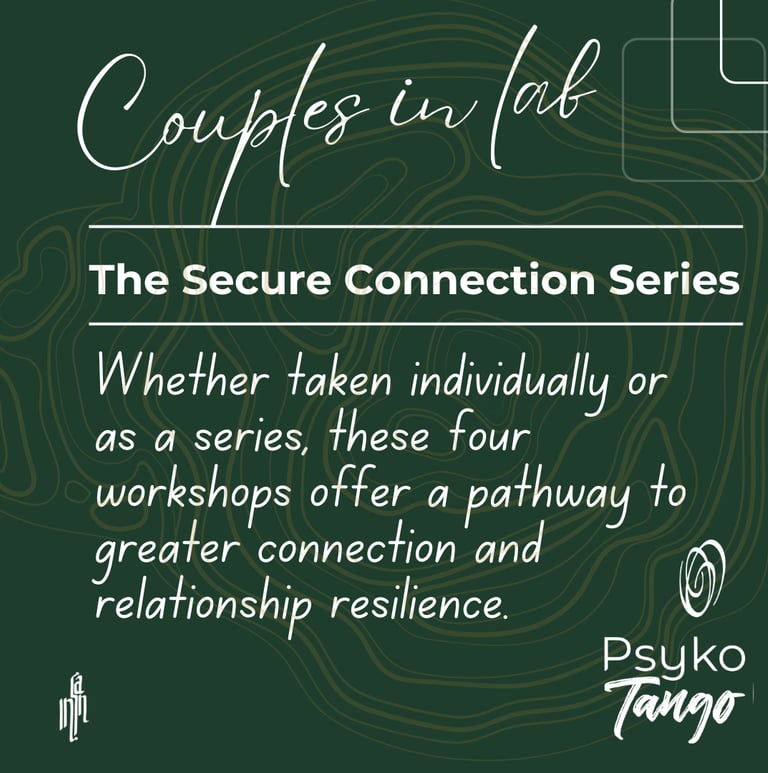
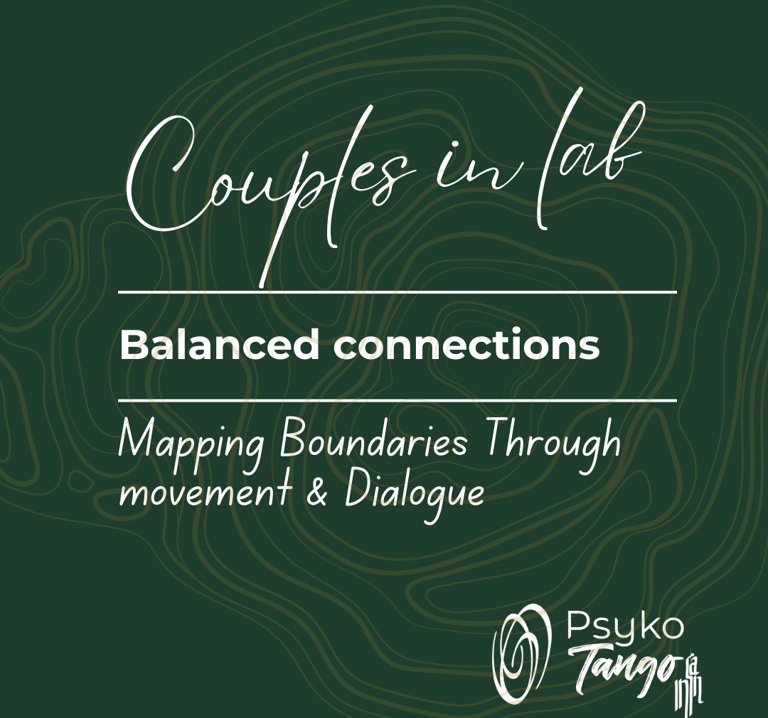
This workshop is a dynamic and action-oriented combining psychosomatic techniques with interactive exercises to help couples navigate and set healthy boundaries.
In-Person Journeys
These in-person journeys are time-bound, small-group somatic containers designed for couples who want to deepen relational safety, presence, and embodied connection.
In-person journeys are offered occasionally and intentionally.
Details are shared through an interest list and participation is by application or invitation, to support fit and safety for everyone involved.

The couples workshop was truly transformative, helping us connect on a deeper level. Highly recommend!
Sarah M.


Attending the workshop was a game-changer for our relationship. We learned so much about ourselves.
Michael B.


★★★★★
★★★★★
Le Psykolab
Somatic practices for individuals & couples
© 2026. All rights reserved.